
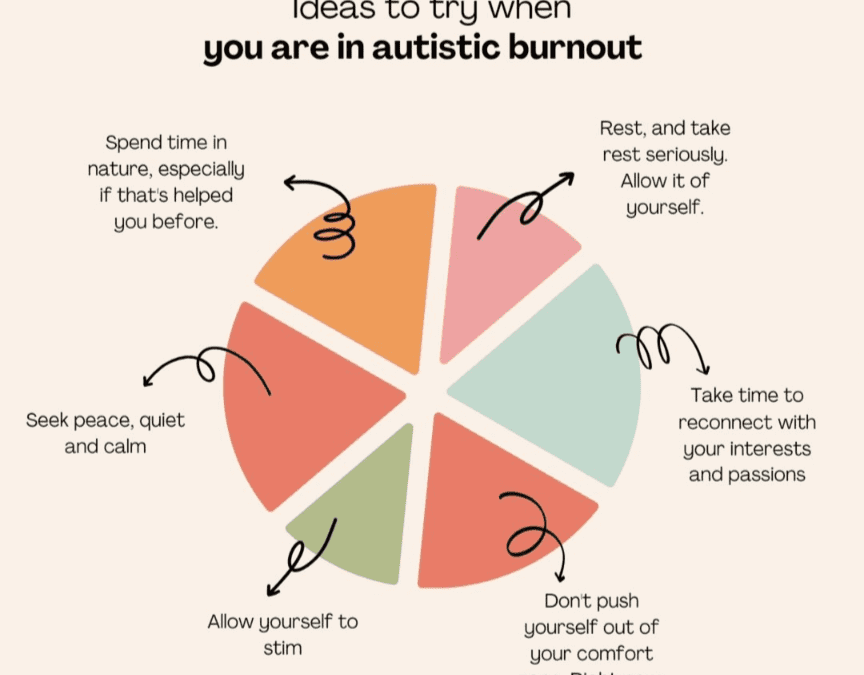
At some point in our lives we can all enter some form of burnout; physical, emotional or both.
Most of us can resonate with overwhelm and exhaustion from overworking or exposure to stress.
However if you, or someone you love or care for is Neurodivergent, you may notice how exhausted and wrung out you (or they) get by life in general.
I have noticed in my practice, that my clients can feel cycles of burnout, it might be every few months or years but it is recurrent.
Burnout is not depression, though depression can be a result of it and it is often mistaken for depression or anxiety by the medical world.
Living in a world which isn’t designed for you, can often be truly overwhelming and exhausting.
Sensory overload, emotional dysregulation, social anxiety, criticism and judgement to name just a few challenges. Seasonal differences and big transitions seem to be a major trigger for my clients too.
These all drain the battery and can lead to shutdown and overwhelm, which presents differently for everyone.
I love to support my clients to begin to asses the ways they feel challenged.
I ask them to keep an overwhelm diary and review it weekly, to inner care take and listen to what they might need.
We call this temperature checking and as many neurodivurgent people are used to being uncomfortable most of the time, this can be challenging initially.
Having someone to share this temperature checking with can really help, so if you want to be an ally here, please do offer support, encouragement, kindness and try not to blame.
Neurodivergent people often struggle with self compassion, as they have so often been told to just get on with it and override their overwhelm, to make others less uncomfortable. I often notice discomfort is not an unusual state, so its hard to imagine what it is to feel comfortable. A great question to ask yourself is “What comfort can I bring myself in this situation?”
Give yourself permission to ask for reasonable adjustments if you need them and use supportive tools like sound cancelling headphones, weighted blankets or stim toys.
If you are an ally, remind loved ones or colleagues, they have permission to do this and support them. I love Pete Wharmby’s ideas illustrated above.
Unlike depression, where being isolated and alone can compound symptoms, those in burnout might need to withdraw and be completely silent.
One thing is sure, reconnecting with interests and passions is vital, even if those around you do not understand this, it can recalibrate you.
Gentle supportive exercise such as swimming or yoga, is great when you feel able to do this.
Being kind and allowing yourself time and space to explore your own processing with compassionate interest, alone or in therapy can be incredibly supportive and give more time between burnout cycles.
As a therapist I know we can all thrive if we are shown understanding, compassion and respected as individuals. We all deserve that!😁